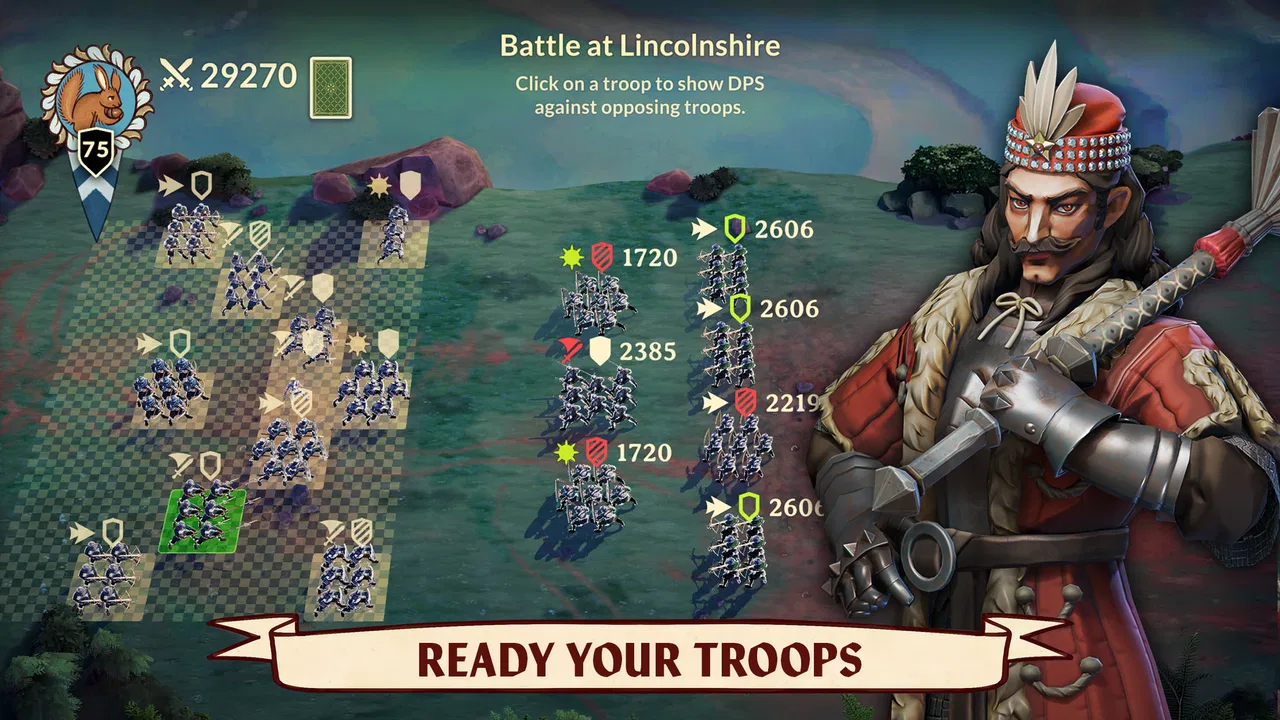
Dawn of Ages: total war battle
- 4.5
- Rating
- 1.00M
- Installs
- Free
- Price
 Analysis by App-foxy
I approached Dawn of Ages expecting a medieval strategy game built around battles, but its strongest first impression is the way it turns a large conflict into a series of manageable decisions. You are not simply tapping an attack button and watching knights collide. The appeal comes from preparing a force, choosing when to commit it, and learning why a battle went well or badly. That makes it a better fit for players who enjoy thinking ahead than for anyone looking for a completely passive action game.
Developed by BoomBit Games, this free strategy title places its focus on medieval warfare and the steady satisfaction of becoming more capable. It is available for players aged Teen, and the store listing shows a 4.5 average from around 37 thousand ratings, with more than a million installs. Those figures suggest a healthy audience, but they do not tell you whether the pace will suit you. In my experience, the real question is whether you enjoy making small tactical choices repeatedly and adjusting your approach after a defeat.
What to expect when you begin
The opening hours are best understood as a guided introduction to the game’s rhythm rather than a full test of your strategic ability. Early tasks help you learn how to move through the interface, prepare for combat, and interpret the results of a clash. I recommend resisting the temptation to rush through those first moments. The early battles are where you learn which decisions matter before the game gives you more to manage.
You May Also Like

 Blood Strike: 2.5 Anniversary
Blood Strike’s Loadouts Turn Every Drop Into a Tactical Gamble
A close look at Blood Strike’s custom loadouts: how fast access to signature weapons reshapes its battle royale rhythm, rewards preparation, and narrows the gap between fights.

 Pandora - Music & Podcasts
Pandora’s Music Is Easy to Start, but Harder to Recover
Pandora’s strength is its low-effort path from a seed to a station. Its weak spot is how much confidence it asks you to place in connection, setup, and quiet recovery.

 8 Ball Pool
 Is Built on Rivalries, Rematches, and Routine
A close look at the rivalries, rematches, shared routines, and unanswered safety questions that turn a quick pool match into a persistent mobile community.

 Samsung Music
’s Quiet Strength Is Playing What You Already Own
Its reach comes less from spectacle than from dependable access to a personal library. That simplicity is both the app’s strongest retention engine and its ceiling.

 AccuWeather: Weather Radar
AccuWeather Review: A Quick, Clear Forecast for Everyday Decisions
For everyday plans, the best forecast is the one you can understand quickly. AccuWeather makes rain timing, radar, and local conditions easy to act on, with a few trade-offs.

 Hill Climb Racing
Why Hill Climb Racing Still Turns Crashes Into One More Run
A tiny car, a bumpy hill and one more upgrade: Hill Climb Racing keeps resurfacing because its simple chaos makes every near-miss feel personal.
More From Our News Desk



The medieval setting is useful because it gives every decision a clear identity. You are dealing with knights, armies, and the pressure of total war rather than abstract colored pieces. That atmosphere makes progress feel more personal, especially when a force you have prepared performs better than expected. At the same time, the presentation should not fool you into thinking that spectacle alone carries the experience. The long-term interest comes from planning and refinement.
As a free game, it is designed to make continued play accessible without an upfront purchase. There are in-app purchases ranging from $0.99 to $99.99 per item, so I would make a personal spending rule before getting deeply involved. The free entry point is convenient, but players who dislike seeing optional purchases in a progression-focused game should keep that consideration in mind from the start.
The game is currently listed as version 2.17.1.2 and supports Android 7.1 or later. That makes it approachable for people using older compatible Android devices, although actual comfort will still depend on the phone or tablet you own. A larger screen can make strategic information easier to read, while a smaller display may require more careful tapping when several controls are close together.
The kind of player who will enjoy it
I would recommend it to someone who likes medieval themes, short strategic sessions, and the feeling of improving through observation. It works particularly well when you want a game that can be played in several brief visits rather than requiring one long uninterrupted sitting. A commute, a lunch break, or a quiet evening can all work, provided you are comfortable stopping after a meaningful decision instead of expecting a complete campaign experience every time.
It is less suitable if your ideal battle game is built around constant manual action, fast reflexes, or a large amount of direct control over every second of combat. It may also frustrate players who want a one-time purchase with no optional spending around it. If you prefer a traditional offline strategy game with a fixed campaign and a clearly defined ending, a premium alternative may be a better match.
From installation to your first useful victory
I use this section to focus on the small choices that turn an early win into useful knowledge: noticing where preparation happens, changing one thing at a time, and pausing to understand the result before moving on. A first victory is most valuable when I can explain what made it work, which makes the next decision less like guesswork. That same habit also helps clear up a few common misunderstandings.
Take the opening instructions seriously
After installing, I would begin by treating the first guided sequence as a tutorial rather than as disposable text. Strategy games often explain individual buttons without explaining the order in which decisions should be made. Here, the safest approach is to notice what the game asks you to do before experimenting. Learn where preparation happens, where battle information is shown, and how the result of an encounter is communicated.
My first practical tip is to avoid changing too many things at once. If an early battle goes poorly, you want to know whether the problem came from your force, your timing, or a misunderstanding of the interface. Altering everything immediately makes the result impossible to read. Change one important choice, try again when the game allows it, and compare what happened.
Another useful habit is to pause mentally before each commitment. The medieval theme can encourage dramatic decisions, but the best early progress usually comes from avoiding waste. Look at what is in front of you, identify the most obvious risk, and make the smallest adjustment that addresses it. This is more reliable than spending resources or making changes simply because a new option has appeared.
What counts as the first successful action
For a new player, the first meaningful success is not necessarily the most spectacular battle. It is the moment when you can explain why your force won. If you finish an encounter and understand which preparation helped, which mistake you avoided, or why one approach was safer than another, you have made more progress than a victory achieved by tapping through instructions without paying attention.
I suggest using the first few encounters as controlled experiments. Keep a simple mental note of the approach you used, then watch how the outcome changes when you make a different choice. This method is especially helpful for players who normally skip tutorials. In a strategy game, remembering one cause-and-effect relationship is often worth more than collecting several rewards without understanding the system behind them.
A realistic everyday routine might look like this: play one short session in the morning, stop after completing a battle or decision, and return later with a clear idea of what you want to test. When you come back, do not immediately spend everything you have earned. First check whether the next challenge demands stronger preparation or merely a different approach. Saving flexibility early can prevent a frustrating restart in your thinking.
How to make early progress without overspending
Because the game is free to start and includes optional purchases, patience becomes part of the strategy. I would not treat every difficult encounter as a signal to buy something. A loss can come from poor timing, an unsuitable setup, or simply moving forward before you are ready. Give yourself at least one thoughtful attempt to understand the problem before considering any purchase.
This is also where the game’s free-to-play structure can create friction. Players who want every improvement immediately may feel pressure to accelerate their progress, while patient players may be happier learning the systems at their natural pace. My advice is to decide whether you are playing for experimentation or speed. If the answer is experimentation, the free route is easier to enjoy because every improvement feels earned through better decisions.
Do not confuse a larger force with a smarter one. In medieval strategy, adding strength can help, but it can also hide the reason a battle succeeded. Early on, I found it more useful to understand how the game wants me to prepare than to chase the biggest possible upgrade. That approach makes later challenges less intimidating because you are building judgement rather than relying on one solution.
Common confusion that can slow new players down
I look at why a dramatic battle can obscure the decisions that mattered beforehand, and how rushing or spending can distract from learning a better approach. Keeping a simple question in mind after each encounter—what would I change next time, and why?—makes progress easier to judge without treating every setback as a demand for a bigger investment. With that in mind, the next section tackles the confusion new players are most likely to encounter.
Why a battle can feel unclear
New players may expect the result of every encounter to be obvious from the moment they begin. Strategy games often work differently: the important decision may happen before the battle animation or outcome appears. If a result feels surprising, go back through your preparation instead of assuming the game was random. Ask what information you noticed, what you ignored, and whether you committed too early.
I also recommend separating visual drama from useful information. A large medieval clash can make it easy to focus on the spectacle, but the practical lesson is usually in the setup and result. Watch for the part of the interface that explains what happened, then use that explanation to guide your next attempt. This habit turns losses into feedback rather than dead ends.
Why rushing can create unnecessary difficulty
The game encourages forward movement, but moving immediately is not always the same as progressing well. If you treat every new challenge as something to clear at once, you may overlook the chance to strengthen your understanding first. A better workflow is to finish the current objective, review what changed, and only then decide whether you are ready for the next step.
This matters most during short sessions. When I have only a few minutes, I prefer completing one deliberate action rather than starting a complicated sequence and abandoning it halfway through. That keeps the game relaxing and reduces the feeling that I must constantly catch up. It also makes it easier to remember what I was trying to accomplish when I return.
What to do when progress feels slower
Slower progress is not automatically a sign that you need to spend money. First, repeat the encounter with a clearer plan. Then consider whether you are using the same approach because it is genuinely best or simply because it is familiar. The most valuable adjustment may be a change in order, preparation, or timing rather than a bigger investment.
There is a trade-off here. Players who enjoy optimizing will find this process satisfying, while players who want constant rewards may experience it as repetition. That difference is important when deciding whether to continue. The game rewards attention more than frantic tapping, so it is strongest for people who enjoy noticing small improvements across several attempts.
How it compares with familiar strategy alternatives
Compared with a traditional premium strategy game, this title is easier to approach because you can begin without paying an entry fee. That makes it useful for testing whether medieval battle strategy is really your style. The compromise is the presence of optional purchases and a progression rhythm designed for continued engagement rather than a single, self-contained campaign.
Compared with a real-time action battle game, it feels more deliberate. You are not choosing it primarily for twitch reactions. Its appeal lies in preparation, consequences, and the satisfaction of reading a situation correctly. If you want to control every movement in the middle of a chaotic fight, another game may offer more direct involvement. If you prefer deciding how to enter a conflict and learning from the result, this one has a clearer advantage.
It also differs from very lightweight casual games because your attention matters. You can play in short sessions, but the decisions are not meaningless filler between rewards. That combination is one of its most useful qualities: it can fit into a busy day without becoming completely mindless. The limitation is that a player seeking a deeply detailed strategy simulation may eventually want more complexity than a mobile-focused experience provides.
The next step after the first victories
Once the opening battles feel comfortable, stop measuring progress only by whether you won. Start asking whether you won efficiently, whether you understood the risk, and whether your preparation would work in a different situation. This shift is where the game becomes more interesting. You move from following instructions to forming your own rules for decision-making.
One advanced habit is to keep a preferred safe approach and a separate experimental approach. Use the safe option when you want dependable progress, then test unusual choices when failure would not cost you much. This gives you room to learn without turning every session into a high-pressure gamble. It is a simple way to balance advancement with curiosity.
Another is to stop playing at a natural point instead of continuing until frustration takes over. If you have just lost twice and are changing decisions randomly, the session is no longer teaching you much. Take a break and return later with a fresh question. Strategy improves when you can compare choices calmly, not when you are trying to force a win.
Players often wonder whether the game is suitable for a younger audience because of its medieval subject. The listed content rating is Teen, so parents and younger players should use that rating as part of the decision. The same applies to spending: since individual in-app purchases can reach $99.99, anyone sharing a device or payment method should set appropriate purchase controls before playing.
My final recommendation
After spending time with it, I see Dawn of Ages as a welcoming entry point for mobile medieval strategy rather than a replacement for every kind of war game. It gives first-time players a clear path into battles, while still leaving enough room to reward careful observation. The best experience comes from treating each encounter as a lesson and resisting the urge to solve every obstacle by rushing or spending.
I would recommend it to friends who want a free strategy game with a medieval identity, short sessions, and decisions that become more satisfying as they understand the consequences. I would steer someone toward a different option if they want a fixed premium experience, uninterrupted action, or complete control over every battlefield moment. For everyone else, the sensible way to begin is simple: follow the opening guidance, make one deliberate change at a time, and aim for your first victory that you can genuinely explain.
The real strength of Dawn of Ages is not merely winning a medieval battle; it is learning why your preparation made the difference. That makes the game approachable on day one and more rewarding when you return with a little more patience, a clearer plan, and the willingness to learn from the next clash.
FAQs for Dawn of Ages: total war battle
01What is the main objective of Dawn of Ages: Total War Battle?
Dawn of Ages: Total War Battle is a strategy game where players build and expand their empires by engaging in tactical battles. The main objective is to conquer territories, strengthen your forces, and form alliances. Players must manage resources, upgrade units, and outsmart opponents to become the ultimate ruler.
02Is Dawn of Ages: Total War Battle free to play?
Yes, Dawn of Ages: Total War Battle is free to download and play. However, it offers in-app purchases that can enhance gameplay, such as premium items and currency. While not necessary to progress, these purchases can provide advantages and speed up development within the game.
03What platforms is Dawn of Ages: Total War Battle available on?
Dawn of Ages: Total War Battle is available on both Android and iOS platforms. This cross-platform availability allows players to enjoy the game on a wide range of devices, ensuring accessibility whether you’re using a smartphone or a tablet.
04Does Dawn of Ages: Total War Battle require an internet connection?
Yes, an internet connection is required to play Dawn of Ages: Total War Battle. The game features online multiplayer functionalities, such as forming alliances and competing against other players in real-time battles, which necessitate a stable internet connection for the best experience.
05Are there regular updates and new content in Dawn of Ages: Total War Battle?
The developers regularly update Dawn of Ages: Total War Battle with new content, including events, challenges, and additional features. These updates ensure that the game remains engaging and dynamic, providing players with fresh experiences and opportunities to expand their strategic skills.
Pros
- Stunning graphics and detailed environments.
- Engaging storyline with rich lore.
- Wide variety of units and strategies.
- Real-time multiplayer battles.
- Frequent updates with new content.
Cons
- Requires constant internet connection.
- In-app purchases can be expensive.
- High battery consumption during play.
- Complex mechanics may overwhelm beginners.
- Large file size affects storage space.

Dawn of Ages: total war battle
Gallery